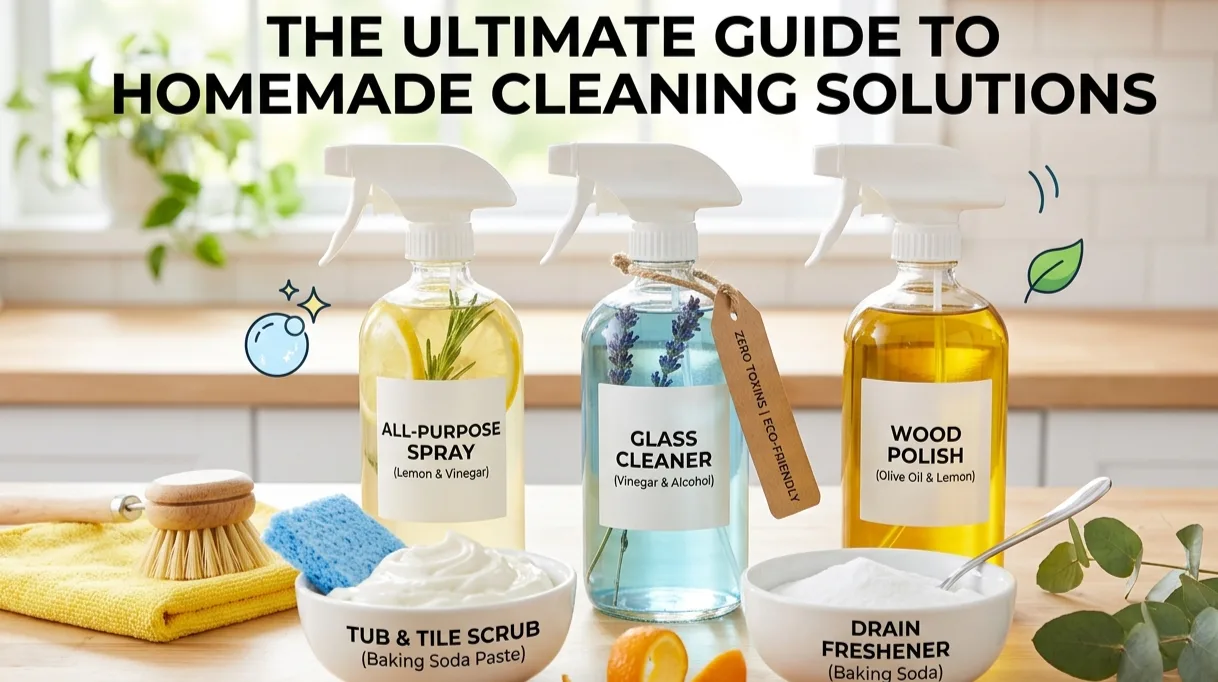
The Best Guide to Homemade Cleaning Solutions (Zero Toxins, 100% Clean)

Hey everyone, it’s The San here! Let’s have a totally honest conversation about what’s under your kitchen sink right now.
If you open those cabinet doors, you’re probably staring at a graveyard of brightly colored plastic bottles. There’s a specific spray for the glass, a powder for the tub, a foam for the oven, and a mysteriously blue liquid for the toilet. And when you use them? You probably have to open a window just to breathe.
I got tired of the chemical headaches, the endless plastic waste, and spending a small fortune on products that are mostly just water and artificial fragrances. That’s why I went down the rabbit hole of homemade cleaning solutions.
As a professional blogger who loves digging into the facts, I didn’t just want “hippy remedies.” I wanted stuff that actually works. Today, I’m giving you the ultimate, no-fluff guide to making your own powerful, safe, and wildly cheap cleaners at home. No clicking around to a million different pages—all the recipes you need are right here. Let’s get to mixing!
The Cold, Hard Facts: Why You Need to Make the Switch
You might be thinking, “San, why fix what isn’t broken? My store-bought cleaner wipes up grease just fine.” It’s a fair question. But the reality of commercial cleaners is a bit dirty. Here are two massive facts that changed my cleaning routine forever:
- The Indoor Air Pollution Crisis: Did you know that the air inside your home can be significantly more toxic than the air outside? The EPA (Environmental Protection Agency) notes that indoor concentrations of some pollutants can be 2 to 5 times higher than typical outdoor concentrations. A huge culprit? The Volatile Organic Compounds (VOCs) off-gassing from commercial household cleaners.
- The Plastic Problem: Over 1 billion plastic cleaning bottles are thrown away every single year. Most of these are not recycled. By making your own solutions in reusable glass spray bottles, you instantly cut down your household plastic footprint.
The “Magic 5” Pantry Ingredients
You do not need a degree in chemistry to make safe homemade cleaning solutions. You just need to understand how a few basic, incredibly cheap ingredients interact.
Here is your new cleaning arsenal:
- Distilled White Vinegar: The ultimate natural degreaser. Because it is highly acidic (usually around 5% acetic acid), it easily dissolves mineral deposits, hard water stains, and sticky grime.
- Baking Soda (Sodium Bicarbonate): A mild alkali that works as a gentle abrasive. It scrubs away stuck-on messes without scratching surfaces and acts as a powerful odor-absorber.
- Liquid Castile Soap: A non-toxic, vegetable-based soap. Unlike synthetic detergents, it naturally lifts dirt, breaks surface tension, and washes away completely clean.
- Rubbing Alcohol (Isopropyl): The secret weapon for glass. It evaporates incredibly quickly, which is how you achieve a streak-free shine.
- Hydrogen Peroxide (3%): A fantastic natural bleaching agent and stain lifter. It’s a much safer, eco-friendly alternative to chlorine bleach.
5 Powerful Homemade Cleaning Recipes You Can Make Today
Grab some glass spray bottles, a funnel, and let’s replace those toxic chemicals!
1. The “Everyday Magic” All-Purpose Spray
This is your go-to workhorse. I use this on kitchen counters, the dining table, the fridge shelves, and even the inside of the microwave.
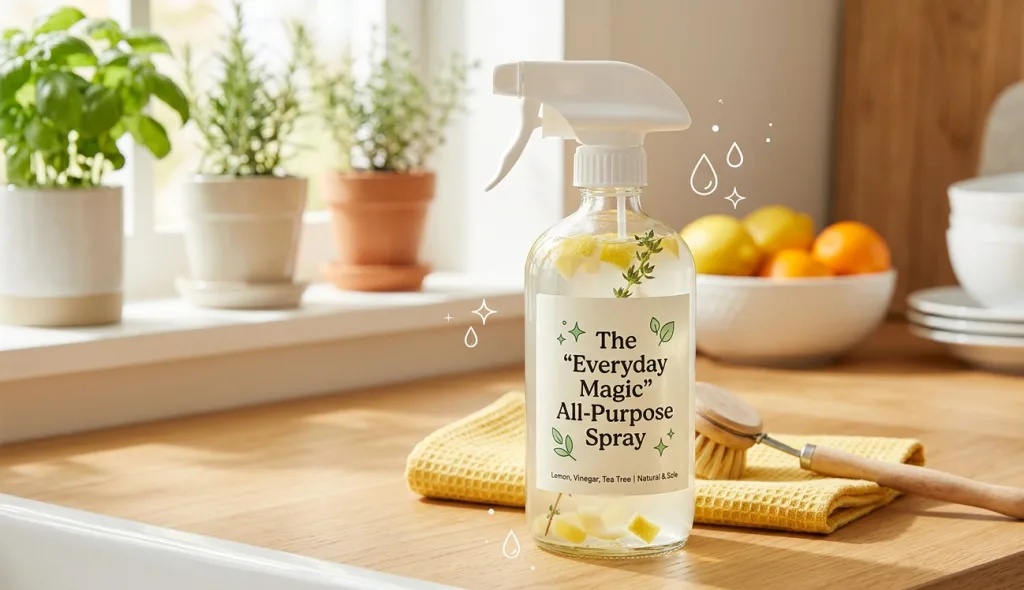
- The Recipe:
- 1 cup Distilled Water
- 1 cup Distilled White Vinegar
- 15-20 drops of Lemon or Sweet Orange Essential Oil (for natural antibacterial properties and a great scent)
- How to Use: Mix in a spray bottle. Shake gently before each use. Spray directly onto surfaces and wipe with a microfiber cloth.
- The San’s Warning: Never use vinegar on natural stone surfaces like granite or marble. The acid can slowly etch and ruin the finish over time!
2. Crystal Clear Glass & Mirror Spray
Stop buying the blue stuff! This recipe cuts through toothpaste splatters on the bathroom mirror and dog-nose prints on the sliding glass door without leaving a single streak.
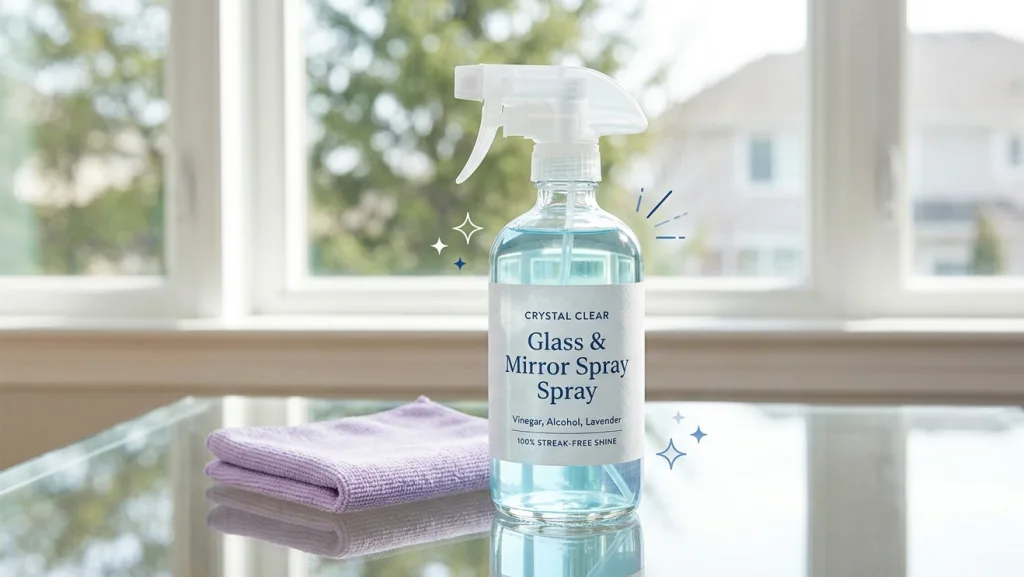
- The Recipe:
- 1 cup Distilled Water
- 2 Tablespoons Distilled White Vinegar
- 2 Tablespoons Rubbing Alcohol
- How to Use: Combine in a spray bottle. Spray lightly on glass and wipe side-to-side (not in circles) using a flat-weave microfiber cloth or crumpled newspaper.
3. Heavy-Duty Scouring Paste
When soap scum takes over your bathtub, or you have burnt-on food in the oven, you need a little elbow grease and this incredible paste.
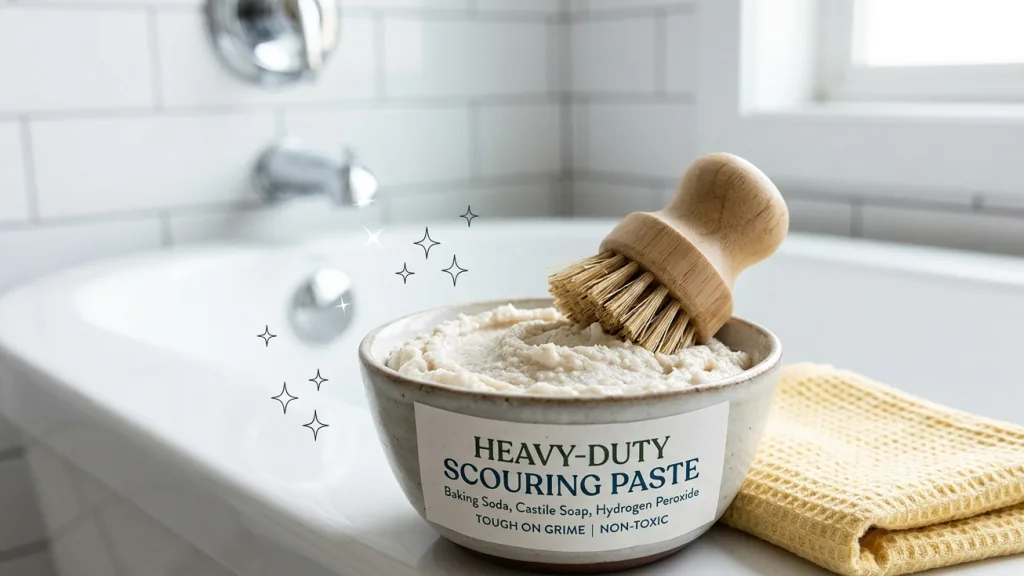
- The Recipe:
- ½ cup Baking Soda
- 2-3 Tablespoons Liquid Castile Soap
- 1 Tablespoon Water (add more if needed to reach a frosting-like consistency)
- How to Use: Mix in a small bowl until it forms a thick paste. Scoop it onto a sponge or scrub brush, apply it to your tub or tile, let it sit for 5 minutes, scrub, and rinse thoroughly with warm water.
4. Citrus Wood Duster & Polish
Commercial wood polishes often contain silicones that actually build up over time, creating a sticky residue that attracts more dust. This natural polish feeds the wood instead.
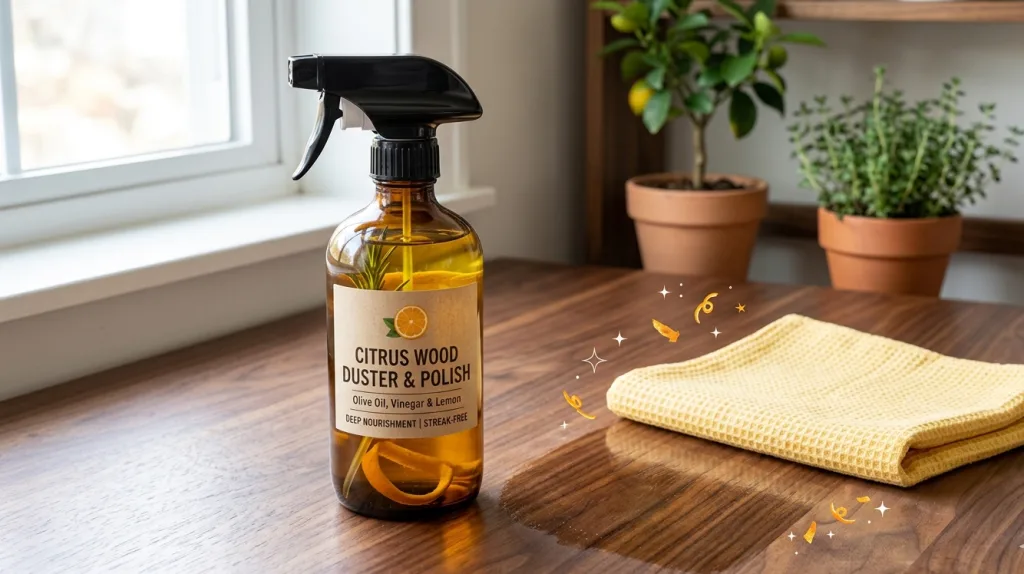
- The Recipe:
- ¾ cup Olive Oil (or Jojoba oil if you prefer)
- ¼ cup Distilled White Vinegar
- 10 drops Cedarwood or Lemon Essential Oil
- How to Use: Shake vigorously (the oil and vinegar will separate naturally). Spray a tiny amount onto a soft cloth—not directly onto the furniture—and buff into the wood following the natural grain.
5. The “Volcano” Drain Freshener
Slow-moving drain? Skip the terrifying, pipe-melting caustic gels from the store. Use middle-school science instead!
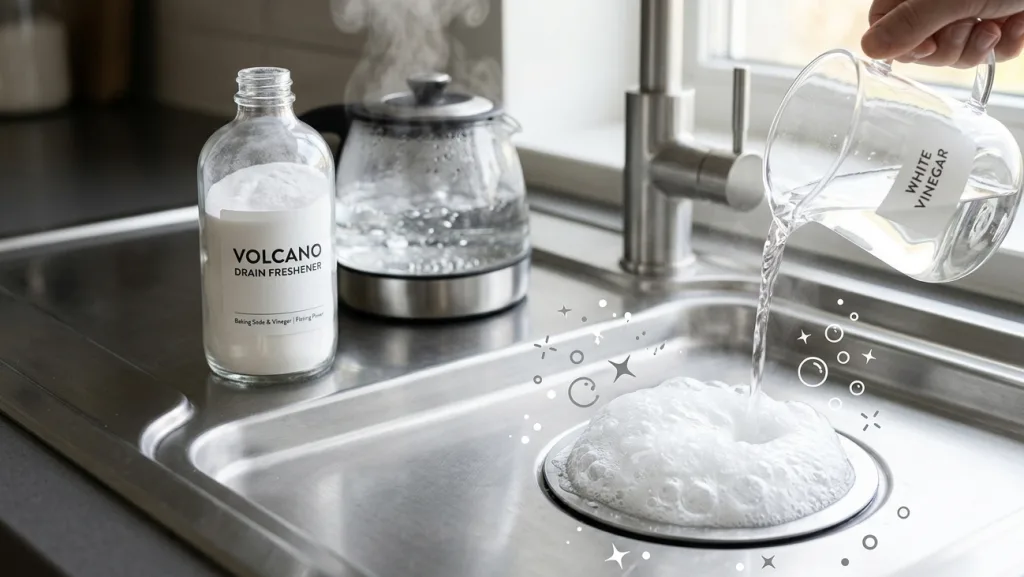
- The Recipe:
- ½ cup Baking Soda
- ½ cup Distilled White Vinegar
- 1 Kettle of Boiling Water
- How to Use: Pour the baking soda down the drain. Follow immediately with the vinegar. Quickly cover the drain with a plug or a wet cloth to force the fizzing action down into the clog. Wait 15 minutes, then flush the pipes with the entire kettle of boiling water.
🛑 The Safety Zone: What You Should NEVER Mix
Just because an ingredient is “natural” doesn’t mean it can’t be dangerous if mixed incorrectly. As your resident fact-checker, I need you to memorize this list. Never combine these:
- Vinegar + Hydrogen Peroxide: Mixing these in the same bottle creates peracetic acid, a highly corrosive chemical that can burn your skin, throat, and lungs.
- Vinegar + Bleach: This creates chlorine gas, which is incredibly toxic and can cause severe breathing problems and eye burns.
- Rubbing Alcohol + Bleach: This reaction creates chloroform, a highly dangerous and toxic compound.
- Castile Soap + Vinegar: While not dangerous, it’s a waste of money. The acid in the vinegar breaks down the soap, turning it into a chunky, oily, white mess that will leave a film on everything you try to clean.
Over to You!
Switching to homemade cleaning solutions is honestly a no-brainer. I did the math recently, and my homemade all-purpose spray costs me about $0.45 per bottle to make, compared to the $5.00+ I was spending at the store.
You save money, you protect your family’s lungs, and your house still looks absolutely incredible.
Now, it’s your turn to chime in! Which of these recipes are you going to mix up first? Do you have a stubborn stain you need help with? Drop a comment below, and let’s chat about it!
Until next time, keep it clean, keep it green, and keep saving that cash! — The San
Frequently Asked Questions (FAQ)
Do homemade cleaning solutions actually disinfect?
It depends on the ingredients. Vinegar is a great cleaner, but it is not an EPA-registered disinfectant. It can kill some bacteria, but for high-risk areas (like a cutting board after prepping raw chicken), you should use Hydrogen Peroxide (3%), which is a powerful natural disinfectant.
Why does my homemade cleaner leave streaks?
Usually, this happens if you use too much soap in your mixture, or if you use tap water instead of distilled water. Tap water contains minerals that get left behind when the water evaporates. Always use distilled water for the best results!
How long do DIY cleaners last?
Solutions made with just water, vinegar, and alcohol can sit under your sink for months. However, if you mix hydrogen peroxide with water, or make a fresh batch of baking soda paste, it’s best to make small amounts and use them immediately, as they lose their potency quickly when exposed to light and air.